Yeast fermentation overview:
Yeast fermentation is a modern, controlled coffee processing technique that uses selected yeast strains to guide fermentation. It increases consistency, reduces the risk of defects, and can significantly boost the clarity, sweetness, and aromatic complexity of the cup. It sits between traditional processing and experimental anaerobic methods — scientific, predictable, and capable of producing highly expressive flavour profiles.
HOW IT WORKS (STEP-BY-STEP)
1. Selective Harvesting
Only ripe cherries are picked. High sugar content increases fermentation stability and flavour outcomes.
2. Inoculation with Yeast
Producers introduce a prepared yeast culture to:
whole cherries (natural or some honey processes), or
depulped coffee with mucilage (washed or honey processes).
This can be done in:
fermentation tanks
sealed vessels or barrels
fermentation bags (anaerobic)
open tanks (aerobic)
3. Controlled Fermentation
The yeast consumes sugars in the mucilage and produces compounds such as:
esters (fruity, floral aromas)
organic acids (malic, lactic, citric)
alcohols
CO₂
Producers control variables such as:
time (often 12–72 hours)
temperature (usually 15–25°C for stability)
oxygen level (aerobic vs anaerobic)
Brix/sugar monitoring
pH tracking
4. Stopping Fermentation
Once the desired sensory outcome is reached, fermentation is stopped by:
washing the beans, or
drying immediately (for naturals).
5. Drying
Beans are dried on raised beds, patios, or mechanical dryers until they reach ~10–12% moisture.
Grower: Felipe Hoyos
Farm: La Esperanza
Farm size: 80 hectares
Varietal: Colombia, Castillo and Cenicafe 1
Region: Caldas, Chinchiná, La Paz
Elevation: 1350 - 1500 m.a.s.l.
Process: Yeast fermentation
Cupping Notes: Flavours of wine, plums, chocolate, grapes, dried fruit, cinnamon, caramel, cherry, with a silky body and juicy citrus acidity






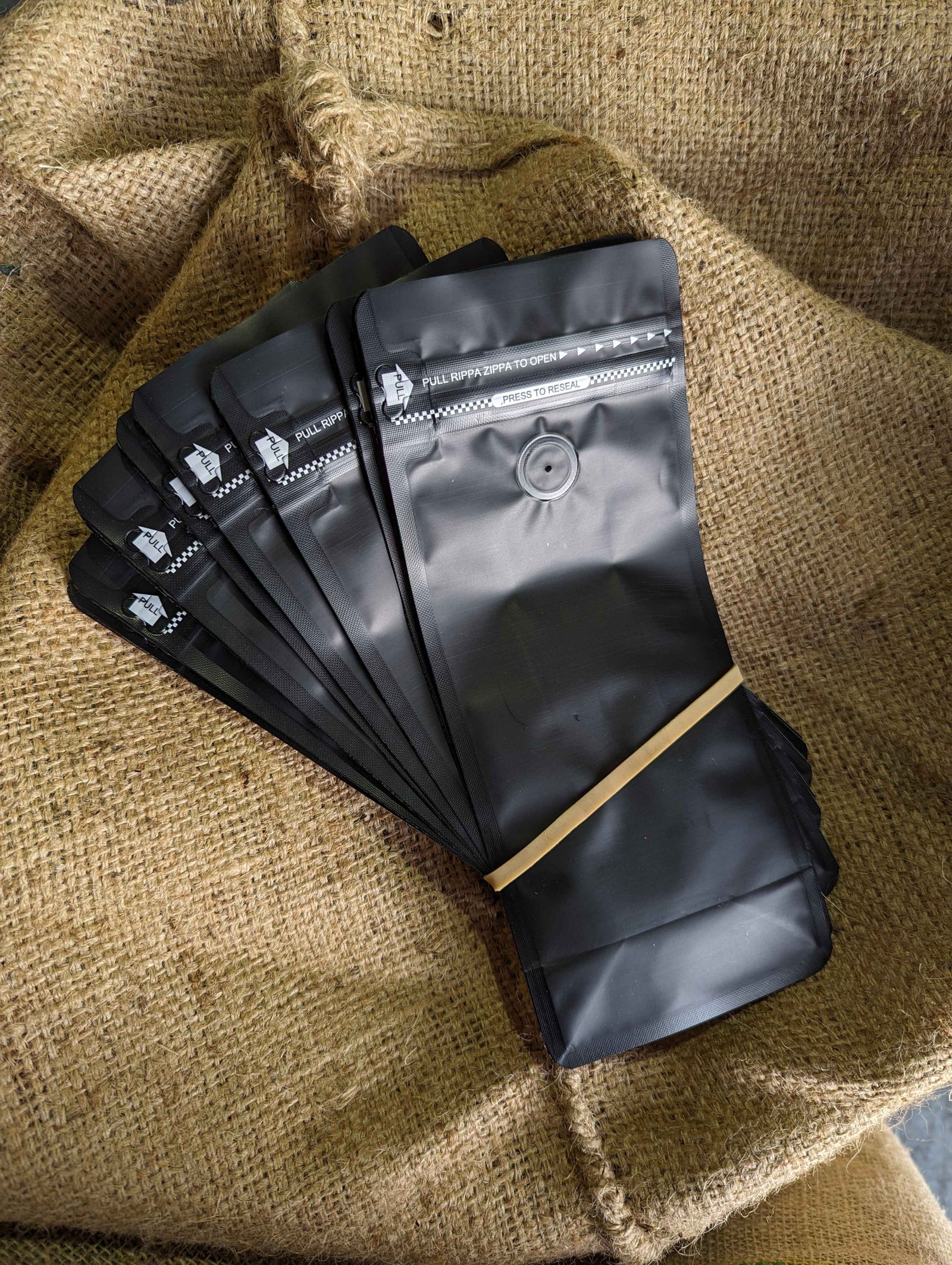 Matte Black Coffee Bag Bundle - With Valve & Rippa Zippa
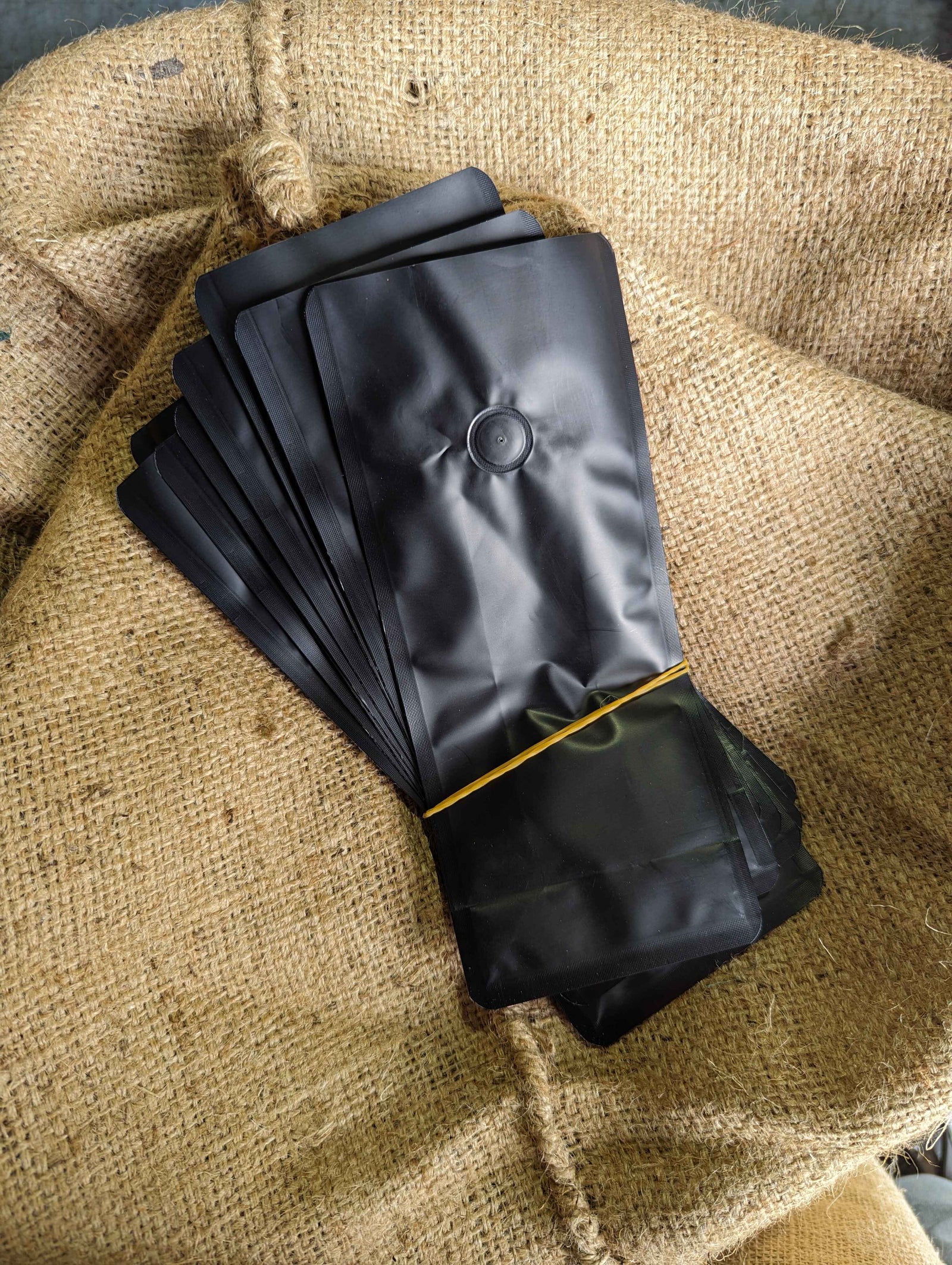 Matte Black Coffee Bag Bundle - With Valve