High in the misty ranges of western Honduras, where forested peaks overlook Lake Yojoa, El Zapote stands as one of the region’s most respected coffee-growing communities. Nestled in the celebrated coffee department of Santa Bárbara, this area has become synonymous with meticulous farming, careful processing, and Honduras’s rise as a global specialty powerhouse.
Producers in Zapote farm on steep, fertile slopes between 1,450 and 1,650 meters above sea level, where cool nights slow cherry maturation and volcanic soils enrich the land with minerals. These conditions, combined with traditional shade-grown practices, create cherries with dense structure, high sweetness, and refined acidity—ideal for washed processing.
Most farms in Zapote are small family holdings, often just 2–5 hectares, cared for across generations. Producers handpick ripe cherries at peak maturity before delivering them to their homes or local beneficio for processing. Like many of Santa Bárbara’s finest coffees, Zapote producers employ a time-honored washed method, respecting both tradition and precision in every stage.
Cherries are pulped on small disk pulpers and moved into cement or tiled tanks where they undergo 12–24 hours of dry fermentation, depending on daily temperatures and elevation. This controlled fermentation breaks down the mucilage and develops the coffee’s clean citric structure. After fermentation, the parchment is thoroughly washed in clear mountain water and channel-sorted to separate the densest beans.
Drying takes place slowly on raised beds or patios—typically 10–15 days—with constant turning to ensure even drying. Shade is applied during harsh midday sun or unexpected rain, preserving the integrity of the parchment and locking in the coffee’s sweetness and clarity.
Honduras’s specialty coffee renaissance has been driven by smallholder dedication, innovation, and cooperative knowledge-sharing. Zapote’s producers are part of this movement—supported by local agronomists, community-led processing improvements, and a shared belief in elevating Honduran coffee to the world stage.
The result is a washed coffee that is bright, sweet, and refreshingly clean, showcasing the best of Honduran craftsmanship.
Tasting Notes
A vibrant, balanced washed Honduran.
Expect aromas of orange blossom and honey.
Flavours of ripe apricot and apple, with notes of yellow plum, panela, and black tea. Lightly sparking acidity with a delicate tea-like body.
Bright citric acidity and a clean, lingering finish make this cup effortlessly drinkable.
Coffee Details
Coffee Grade: Specialty Washed
Farm/Community: Zapote (El Zapote), Santa Bárbara
Varietal: Bourbon, Catuai, Pacas (varies by producer)
Processing: Fully washed
Altitude: 1,450–1,650 meters above sea level
Producers: Smallholder families of the El Zapote community
Region: Santa Bárbara, Western Honduras
Farm Size: Typically 2–5 hectares






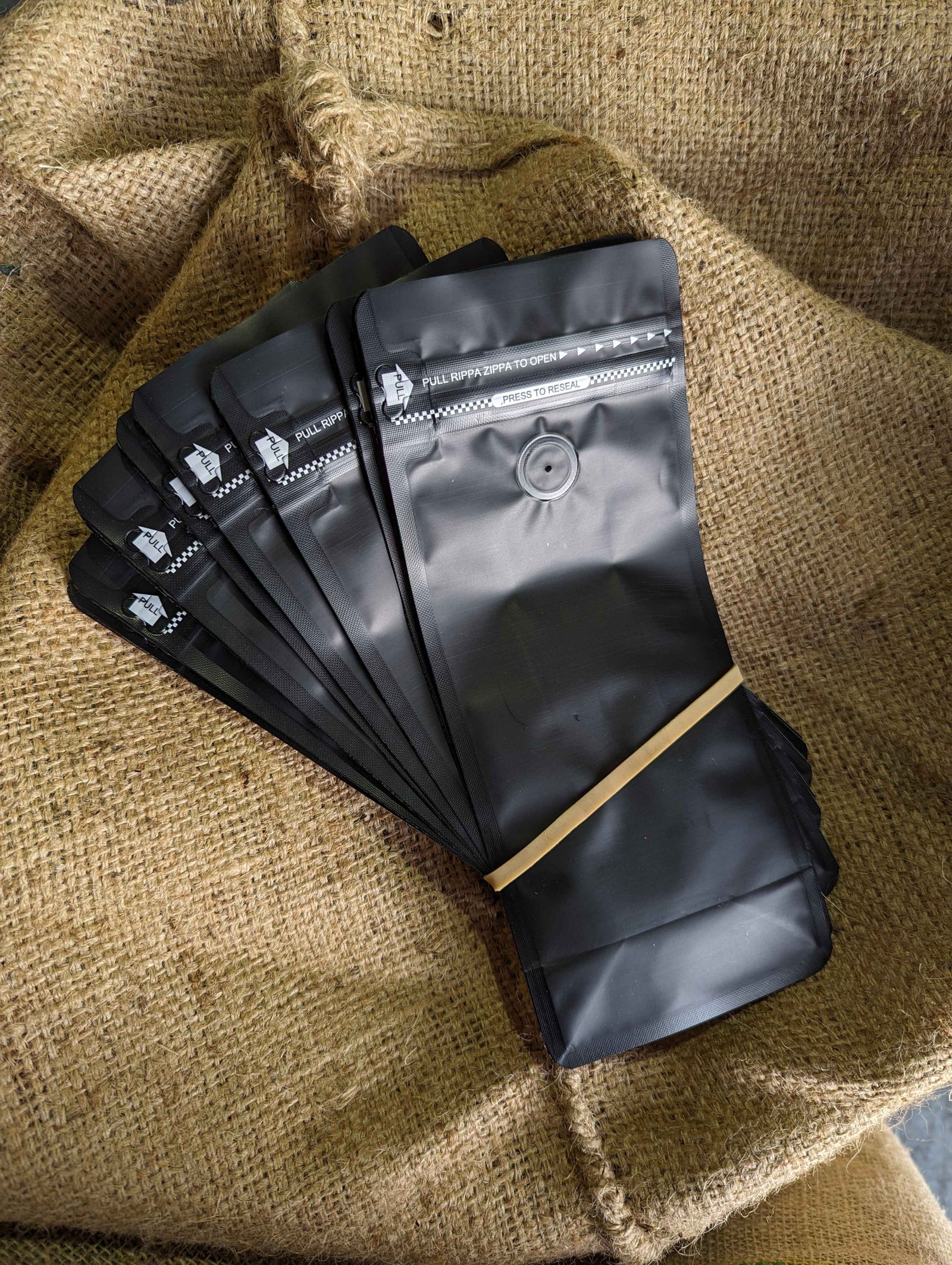 Matte Black Coffee Bag Bundle - With Valve & Rippa Zippa