Kenya produces some of the world's most recognisable coffees. Known for their vibrant acidity, intense fruit character and remarkable clarity, Kenyan coffees have developed a reputation that is almost unmatched among washed African origins.
Coffee was introduced to Kenya in the late nineteenth century, eventually becoming an important part of the country's agricultural economy. Today, much of Kenya's coffee is produced by smallholder farmers, many of whom deliver ripe cherries to local Farmer Cooperative Society washing stations, known locally as factories.
These small farms are often scattered across the highlands surrounding Mount Kenya and the Aberdare ranges, where elevation, fertile soils, cool temperatures and seasonal rainfall provide ideal conditions for Arabica production.
Understanding Kenya AB
One of the most important things to understand about Kenyan coffee is that AB is a physical grade, not a flavour designation.
Kenyan coffee is traditionally sorted by bean size after milling. AB represents beans in the medium-large screen range, sitting below the larger AA grade. Under Kenya's official grading system, AB beans pass through screen 18 and are retained on screen 16, while commercial exporters may describe AB lots using slightly different screen conventions.
The grade tells us about the size and preparation of the green coffee, but it does not guarantee a particular cup profile. The character of a Kenyan AB is ultimately determined by its growing region, varieties, altitude, harvest quality and processing.
And when those factors come together, Kenyan AB can offer an exceptional balance of fruit, acidity and sweetness.
The Kenyan Washed Process
Kenya's traditional washed processing system is an important part of the country's distinctive cup profile.
Ripe cherries are selectively handpicked before being delivered to a local washing station. The cherries are pulped and the coffee is fermented to break down the remaining mucilage before being thoroughly washed and graded by density.
The parchment is then dried slowly on raised beds, often under the careful supervision of station staff and farmers. This combination of selective harvesting, fermentation, washing and controlled drying helps produce the extraordinary clarity associated with Kenyan coffee.
Because the coffee is fully washed, there is little interference from the fruit itself, allowing the characteristics of the variety and growing environment to shine through.
The Cup
This is a classic washed Kenyan profile—bright, juicy and intensely aromatic.
The cup opens with vibrant blackcurrant and red berry acidity, followed by layers of citrus and delicate florals. As it cools, a gentle black tea character develops alongside a soft sweetness reminiscent of brown sugar and honey.
The acidity is lively without becoming sharp, giving the coffee a juicy, almost wine-like quality. The body is smooth and rounded, while the finish is exceptionally clean and persistent.
The overall impression is one of bright fruit, elegant florals and tea-like sweetness, with the characteristic Kenyan acidity carrying right through to the finish.






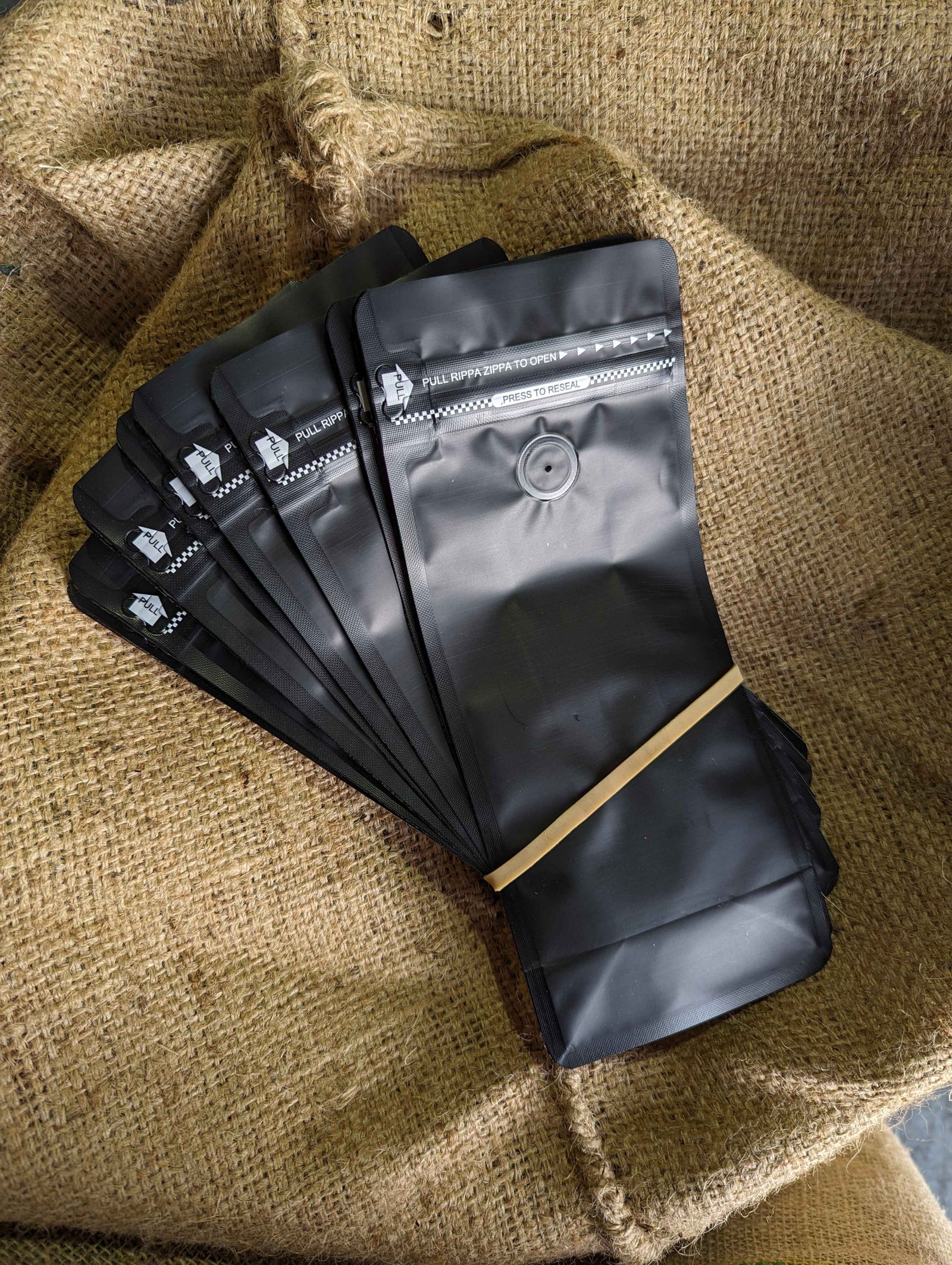 Matte Black Coffee Bag Bundle - With Valve & Rippa Zippa